The Real Cost of the IoT Revolution & Energy Harvesting Solution
A comparative analysis of hidden costs in traditional sensor installations vs. sustainable energy harvesting models in light of McKinsey data and global IoT forecasts.
The Invisible Infrastructure Barrier Facing the IoT Revolution
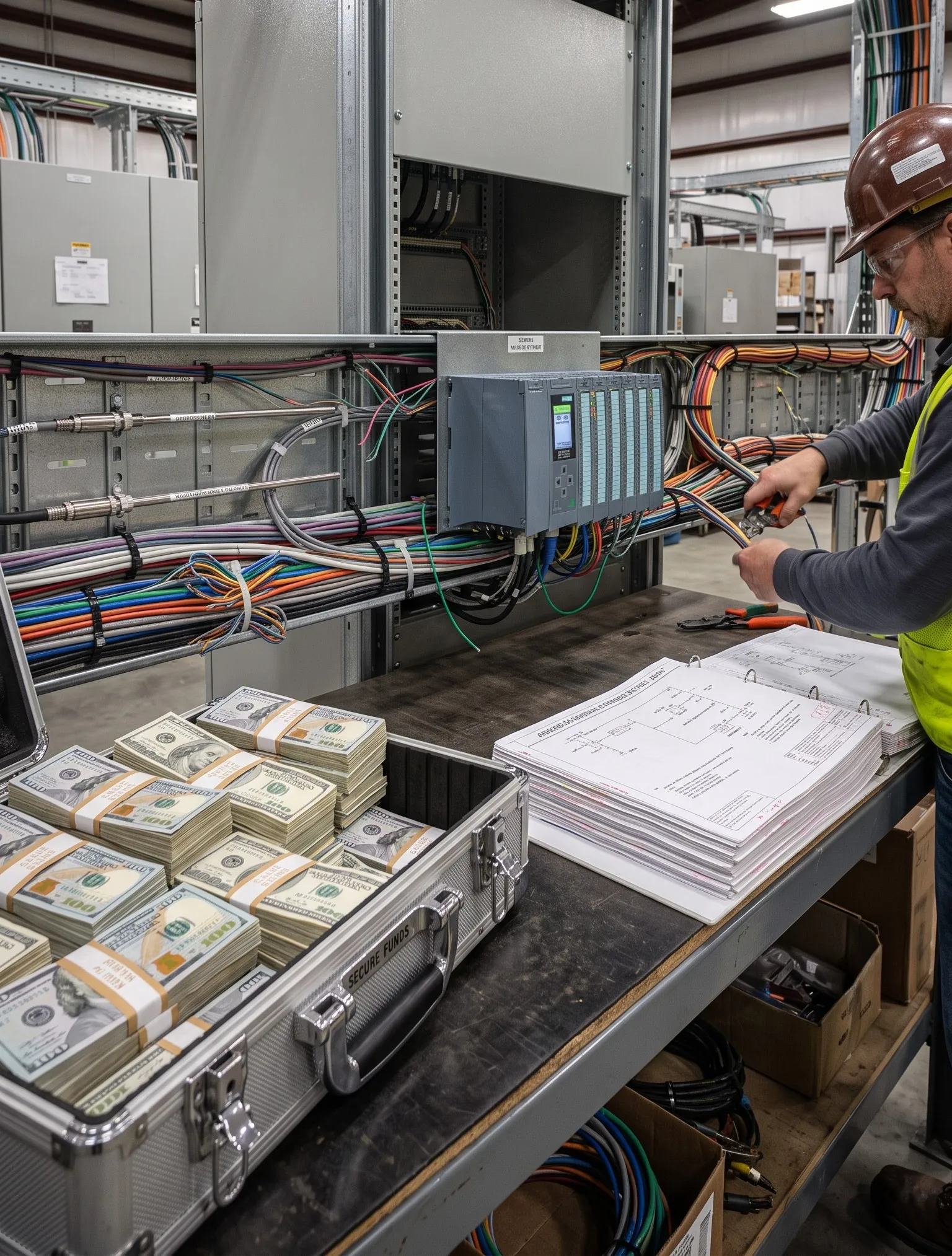
McKinsey & Company reports project that the Internet of Things (IoT) market will create a massive economic value of between $5.5 trillion and $12.6 trillion globally by 2030. However, there is a painful reality ignored by the industry: The biggest obstacle to full sensorization of the physical world is not technology; it is the infrastructure crisis created by cables, batteries, and inaccessible areas.
As industrial facilities become equipped with thousands of sensors, traditional battery solutions turn into an unsustainable financial and operational burden.
The fact that 99% of industrial data generated globally today goes to waste unused is not due to insufficient data processing, but because liberated sensor infrastructure generating data at the right time and place cannot be deployed.
Unseen Part of the Iceberg: Real Burden of Traditional Sensors
While wired and battery sensors appear 'low-cost and easy' at purchase, this is only the deceptive part above water. In a world simulation of 30 billion sensors projected by McKinsey, the invisible burden of infrastructure is:

Sensor Purchase (CapEx)
The purchase price of the sensor unit is only the superficial part of the project. Without accounting for conduit, tray installation, and battery logistics, it is a misleading cost illusion.
Cabling Infrastructure
The requirement for copper cables, steel trays, and plastic ties is long enough to circle the globe 75,000 times, triggering massive Scope 3 CO₂ emissions.
Plastic Cable Ties
Billions of plastic ties used in cable mounting create a massive microplastic waste hazard and environmental pollution that persists for centuries.
Metal Cable Trays
The steel trays needed to carry sensor cables would encircle the earth 750 times, adding significant infrastructure cost and carbon footprint.
Labor Burden
The humongous workforce required for sensor installation, cabling, tray setup, and loop testing severely limits operational efficiency.
I/O Modules
Connecting wired sensors to the automation system requires billions of input/output cards and modules, increasing cabinet space and system complexity.
A4 Documentation
The volume of paper documentations for project schematics, manuals, and test reports costs 3.6 million trees and massive water consumption.
📋 View All Hidden Costs List
The purchase price of the sensor unit is only the superficial part of the project. Without accounting for conduit, tray installation, and battery logistics, it is a misleading cost illusion.
The requirement for copper cables, steel trays, and plastic ties is long enough to circle the globe 75,000 times, triggering massive Scope 3 CO₂ emissions.
The steel trays needed to carry sensor cables would encircle the earth 750 times, adding significant infrastructure cost and carbon footprint.
Connecting wired sensors to the automation system requires billions of input/output cards and modules, increasing cabinet space and system complexity.
Billions of plastic ties used in cable mounting create a massive microplastic waste hazard and environmental pollution that persists for centuries.
The humongous workforce required for sensor installation, cabling, tray setup, and loop testing severely limits operational efficiency.
The volume of paper documentations for project schematics, manuals, and test reports costs 3.6 million trees and massive water consumption.
COST COMPARISON SIMULATION
Total initial installation (CapEx) and 10-year operational cost (OpEx) analysis of wired, battery, and self-powered IoT nodes.
Project Parameters
50 Sensors • 60m Cable • $30/h Edit ⚙️
Project Parameters
50 Sensors • 60m Cable • $30/h10-Year Cumulative Cost Curve (TCO)
Ecological Savings & Environmental Impact
10-Year TCO & Cost Comparison Summary
ESCOM-es Energy Harvesting self-powered sensors eliminate 100% of signal cabling, cable trays, and PLC I/O expansion modules. Over a 10-year operating period, they eliminate battery replacements, scaffolding permits, and downtime risks, achieving maximum TCO and OpEx savings.
Detailed Itemized Cost Breakdown
| Cost Item | Wired Sensors | Battery Wireless | Energy Harvesting (ESCOM-es) |
|---|---|---|---|
| Initial Setup Cost (CapEx) | |||
| Sensor Purchase Cost Unit hardware purchase cost for industrial-grade sensors ($300/Unit). Kept identical across all options for comparison consistency. | $0 | $0 | $0 |
| Wireless Gateway (Wi-GaTe) Industrial wireless gateway cost, which aggregates sensor data and forwards it to the PLC ($900/Gw). 1 gateway is required per 64 sensors. | - | $0 | $0 |
| PLC I/O Input Modules Hardware cost for PLC analog/digital input modules needed to wire individual sensor lines into the control system ($80/Input). | $0 | - | - |
| Copper Signal Cable Material cost of shielded copper instrumentation cable routed from each sensor to the junction box or PLC ($2.50 per meter). | $0 | - | - |
| Cable Tray & Metal Conduit Aggregate of main cable tray route ($25.00 per meter) plus individual protective metal conduit drops ($15.00 per sensor). | $0 | - | - |
| Infrastructure Metal Supports Support consoles and ceiling/wall hangers for the main tray (one every 1.5m, $30.00) plus conduit clamps ($20.00 per sensor). | $0 | - | - |
| Mounting Accessories (Glands, Junctions) Mounting hardware: Junction boxes/glands for wired ($30); basic brackets for battery ($10); none for ESCOM ($0). | $0 | $0 | - |
| Plastic & Cable Ties Industrial-grade plastic ties required to secure copper cables along the tray route ($0.30 per meter). | $0 | - | - |
| Field Installation & Mounting Labor Field construction hours: Tray assembly and cable pulling for wired; screw/magnet mounting and gateway initialization for battery wireless. | $0 | $0 | - |
| Engineering & Project Design Design services: Loop diagrams, terminal drawings, and PLC logic for wired ($75); RF mapping and gateway registers mapping for wireless ($20). | $0 | $0 | $0 |
| 10-Year Operating Cost (OpEx) | |||
| Battery Replacement Material Material cost of replacement industrial lithium cells (e.g. Saft/Tadiran 3.6V AA or C) required over 10 years ($15.00 per cell). | - | $0 | - |
| Battery Swap Labor Technician time to locate the sensor, open housing, replace the cell, inspect/renew gaskets, reseal, and test link (0.50 hours). | - | $0 | - |
| Logistics, Scaffolding & Safety Permits Shared cost for scheduling lift/scaffolding equipment, hot work permits, and safety coordinator oversight to access sensors ($25.00/swap). | - | $0 | - |
| Downtime Risk & Registry Logs Risk cost associated with predictive maintenance data gaps and unplanned downtime risks while a battery is dead or being swapped ($15.00). | - | $0 | - |
| Chemical Waste Disposal Fee Environmental compliance fee and hazardous heavy metal disposal tax required for recycling spent lithium batteries ($2.00 per cell). | - | $0 | - |
| 10-Year Total Cost of Ownership (TCO) | $0 | $0 | $0 |
Technology Breaking the Chains: ESCOM-ES Energy Harvesting
Just as control is lost when data fails to reach the brain in the human body, safety and predictability vanish when sensing stops in industrial facilities. With over 18 years of energy experience and energy harvesting solutions, ESCOM-ES liberates sensors by completely turning them into wireless & batteryless sensors.
Summary: The Real Future of IoT
As highlighted by McKinsey, low-cost, low-power, and sustainable sensors are critical for IoT infrastructure. ESCOM-ES eliminates battery waste, miles of cabling, downtime risks, and heavy installation labor, merging green and digital transformation into a single platform.
A truly "smart" facility is only possible when every industrial asset communicates continuously and freely.
Request Feasibility Analysis
Plan a wireless and batteryless sensor transformation for your facility together with our expert engineers.
Contact Us