Vibration Energy Harvesting & Self-Powered Wireless Sensors
Convert mechanical vibration and shock energy from industrial rotating machinery, compressors, and pumps into continuous electrical power. Resonance-tuned self-powered telemetry architecture for wireless IoT sensors, operating without batteries or external wiring.
The Story of Shaking: Capturing the Energy Around Us
If you have ever worn a self-winding automatic wrist watch, you have already experienced kinetic harvesting. As your arm moves, an internal metal weight rotates, winding the mainspring to power the watch forever. Similarly, shake-powered emergency flashlights use a sliding magnet inside a copper coil to light up LEDs without batteries. Industrial kinetic harvesting works on this exact same concept, scaled down to catch micro-oscillations. The hum of an electric motor, the stroke of a piston, and the vibration of a pump housing are continuous rivers of mechanical energy. Instead of letting them disappear as heat, we capture them to power smart telemetry nodes eternally.
The Physics: Faraday's Induction & The Swing Analogy
At the heart of electromagnetic kinetic scavenging is Faraday's Law of Induction, formulated by Michael Faraday in 1831. It states that moving a magnet near a copper coil creates an electric voltage. In our systems, a permanent magnet mass hangs on a spring inside a copper coil. When the machinery vibrates, the magnet bounces up and down, shifting the magnetic field and generating alternating electricity.
5 Extreme Engineering Fields Where Motion Turns Into Electricity
In the wildest environments where batteries and wires cannot survive, kinetic energy harvesting provides continuous monitoring power.
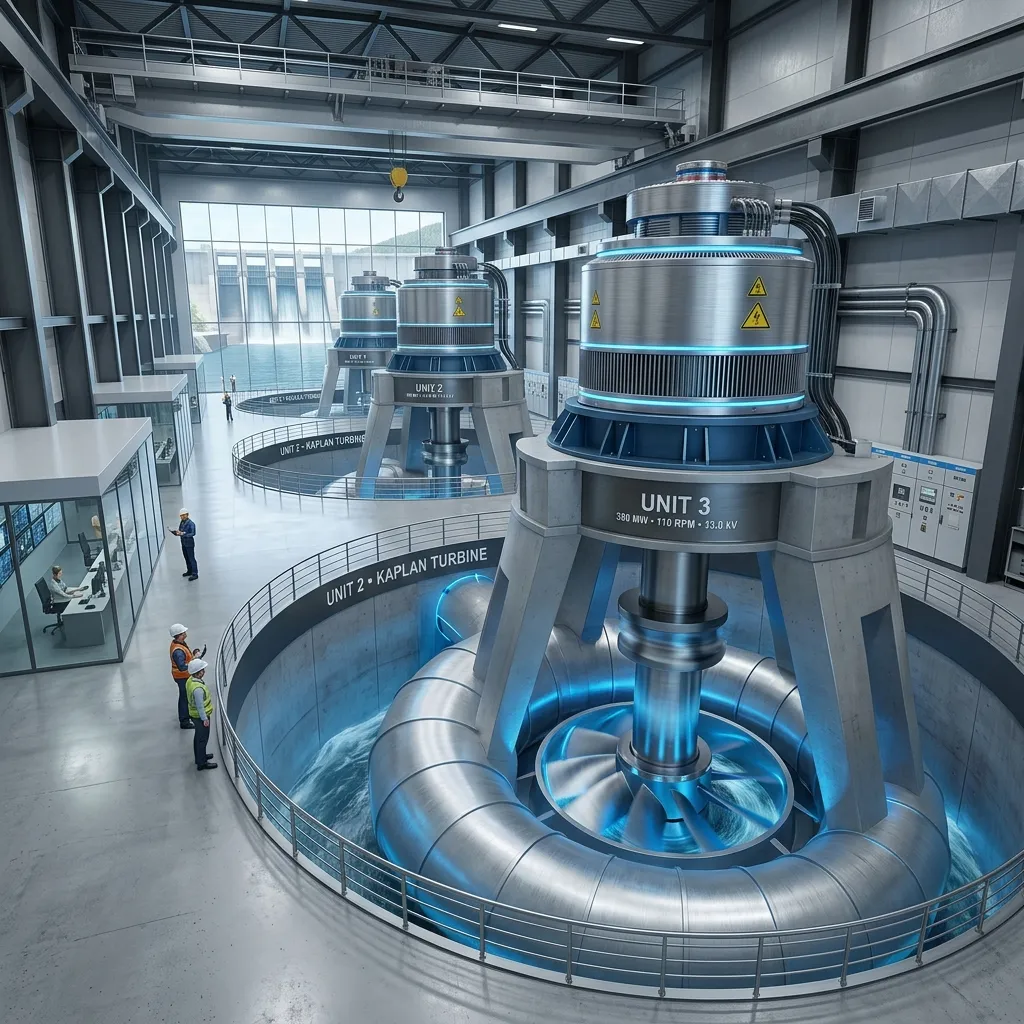
Hydroelectric Dams: Gigawatts from Fluid Flow Kinetics
The oldest and largest scale kinetic energy harvesting application in the world is hydroelectric dams. High-pressure falling water routes through massive penstocks to drive Francis or Kaplan turbines, converting massive fluid kinetic energy into gigawatts of electricity to power entire grids.
Wind Turbines: Clean Grid Power from Atmospheric Flow
Wind turbines capture the massive kinetic energy of moving atmospheric air currents. Aerodynamic blades rotate under wind shear, driving low-speed shafts geared up to high-speed generators, supplying megawatts of clean and renewable electricity worldwide.

Tidal Stations: Ocean Current Kinetics from Lunar Gravity
Gravitational pulls from the Moon and Sun drive massive ocean water displacements. Underwater tidal turbines anchored to the seafloor capture the kinetic force of these reliable marine streams twice a day, generating highly predictable clean grid power independent of weather.

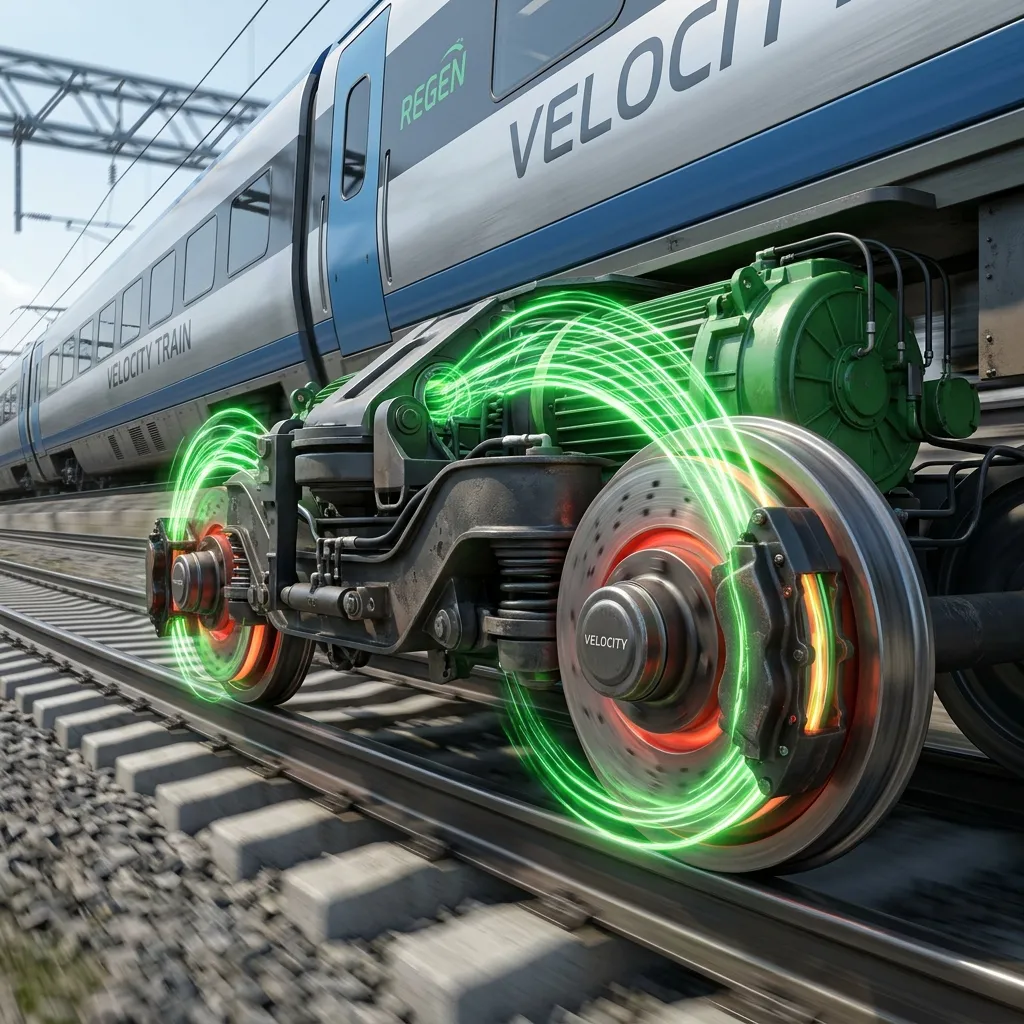
Regenerative Braking: Battery Recovery from Deceleration
Electric trains, subways, and modern EVs recover energy during braking. When the vehicle decelerates, the kinetic energy of wheel rotation runs traction motors in reverse as generators. Instead of wasting deceleration momentum as brake pad friction heat, it is recovered as electricity for battery storage.
Marine Engines: Crankcase Harvesting (CoRoM)
At the peak of our sensor technology portfolio, giant marine engine telemetry systems operate in hostile interiors. The massive vibrations and high centrifugal forces of connecting rods are captured by custom electromagnetic micro-generators to supply wireless sensors measuring bearing temperatures without batteries.

Kinetic Energy Harvesting Real-world Applications
Rather than utilizing chemical batteries in inaccessible areas, ESCOM-es integrates kinetic energy modules directly into specialized industrial sensors:
CoRoM
Riding the biyel arm of large 2 and 4-stroke marine diesel engines, CoRoM experiences intense reciprocating stroke forces. It scavenges this continuous stroke movement to power sensors measuring crankpin bearing temperatures.
Clean Operations & ATEX Explosive Safety
In oil refineries, gas facilities, and grain silos, battery-powered devices present risks of thermal runaway and spark generation. Cable installation costs are also prohibitive. By utilizing kinetic harvesters, the system becomes intrinsically safe (ATEX compliant) as the solid-state capacitors store minimal energy, preventing ignition. Furthermore, eliminating heavy metal battery waste directly supports ESG carbon footprint reductions.
Compatible Hardware Solutions
Let's Model the Waste Energy Potential at Your Plant
Analyze your machine running speeds and vibration severities together with our engineering team to design your batteryless telemetry conversion.
Technical FAQs on Kinetic Energy Harvesting
What is kinetic energy harvesting and what fundamental physical principles does it rely on?
Kinetic energy harvesting is the process of capturing ambient mechanical motion, vibration, gravity, or physical shock and converting it into electrical power. It primarily relies on three physical phenomena: electromagnetic induction (moving magnet relative to a coil), piezoelectric effect (materials generating voltage under stress), and electrostatic harvesting (capacitance changes in a charged system).
At what scales can kinetic energy harvesting be applied?
It scales from macro-generation to micro-power. At a macro scale, hydroelectric dams, wind turbines, and tidal generators capture fluid motion to power electric grids. At a medium scale, regenerative braking in electric vehicles and trains recovers deceleration energy to charge batteries. At a micro scale, machinery vibrations are harvested to produce milliwatts of power, enough to operate electronic circuits and wireless transmitters.
How does kinetic energy harvesting contribute to environmental sustainability?
It eliminates chemical battery waste containing toxic heavy metals. It also reduces copper and plastic consumption by cutting down the need for extensive wiring. Furthermore, by reclaiming waste motion (like braking or machinery vibration) and converting it to electricity, it enhances overall system efficiency and directly lowers carbon footprints.