Energy Harvesting
You don't always have to depend on a grid line, kilometers of cabling, or batteries that need periodic replacement to reach energy. In fact, the power you need is already available in your facility; it's just waiting to be 'harvested' correctly.
A temperature difference on a pipeline or the body of a running engine, the kinetic energy of moving parts inside a machine, or the surrounding light and electromagnetic waves... These are often unseen energy sources seen as 'lost' or 'waste'. At ESCOM-es, we capture this invisible but powerful potential of nature and industry with high precision.
What is Energy Harvesting?
This method is much more than a simple energy conversion. Energy harvesting is the art of collecting thermal, mechanical, or electromagnetic energy from the environment and refining it with our advanced micro-electronic circuits into the pure electricity needed by our low-power sensors.
In this way, we transform;
- Mechanical vibrations,
- Temperature differences (thermoelectric),
- Operational movements and naturally occurring energy into micro-power plants.
The result? A smart ecosystem that requires no maintenance, has no battery replacement costs, and is self-powered even in the harshest field conditions. We don't just call this technology; we call it the journey of energy turning into data in its most sustainable form.
The Real Cost of the IoT Revolution
& The Energy Harvesting Solution
Comparative analysis of the hidden costs of traditional sensor installations and sustainable energy harvesting models in the light of McKinsey data and global IoT projections.
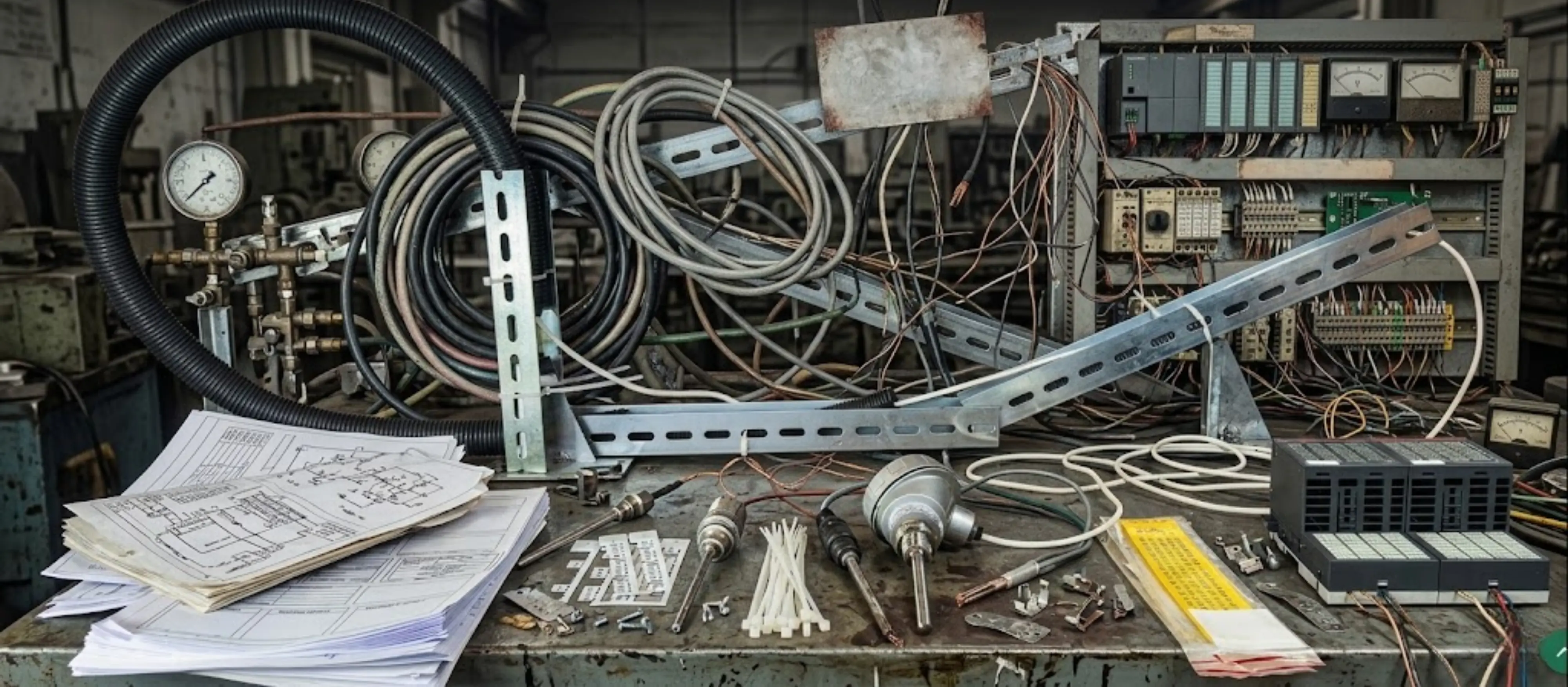 TRADITIONAL BURDEN
Traditional Cabled Sensor Infrastructure
Complex, costly infrastructure requiring meters of copper cabling, heavy metal cable trays, steel construction mounts, and high labor.







 ESCOM-es HIGH-TECH
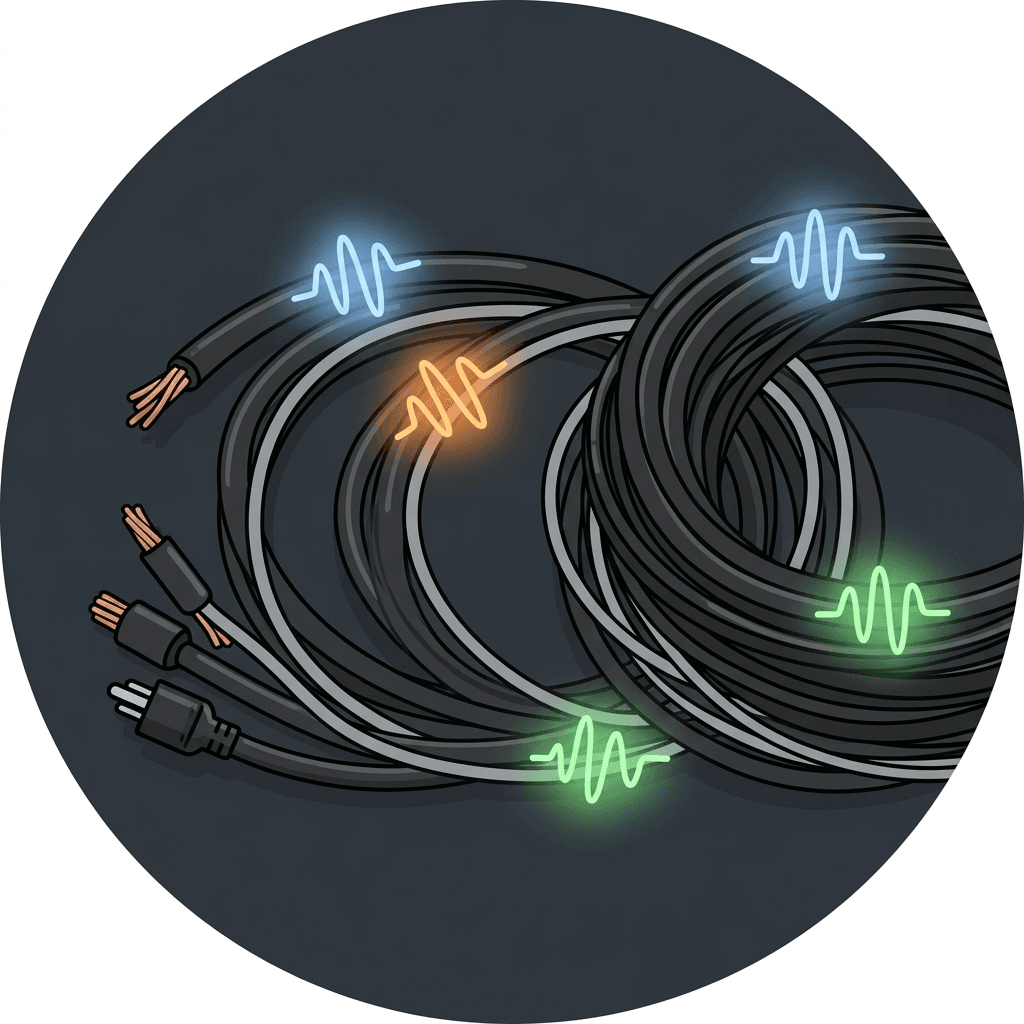
ESCOM-es Wireless & Energy Harvesting Technology
A 'Plug & Forget' system installed in minutes that completely eliminates cabling and battery needs by converting ambient waste energy (heat, vibration, light) into electricity.




📊 The True Barrier to IoT (McKinsey Analysis)
According to McKinsey analysis, the main obstacle to the trillion-dollar economic potential of IoT is not technology deficiency, but traditional cabling and battery requirements that restrict sensors. Due to the infrastructure dependency barrier, many IoT applications are technically possible but become impractical; 99% of the data obtained from the field is lost without being used due to insufficient sensing infrastructure.
🏔️ The Hidden Cost of the Iceberg
The perception of 'low initial cost' for cabled and battery-powered sensors is a major illusion. The vast majority of project cost and operational complexity is made up of hidden expenses under the surface, such as cable trays, power and signal lines, mounting accessories, downtime, and labor hours.
⚡ Energy Harvesting & ESCOM-es Freedom
Sensors generating their own energy from ambient vibrations, temperature differences, or magnetic fields liberate IoT. ESCOM-es provides maintenance-free, battery-free, and wireless data flow even in the most challenging areas with its 'Plug & Forget' technology that consumes only 138 μW of ultra-low power and can harvest energy even from a 5°C temperature difference.
Traditional Infrastructure Engineering Analysis & Mathematical Modeling
Mathematical analysis of the global engineering burden if 30 billion sensors were installed using traditional methods (cables and batteries).
Cabling and Metal Infrastructure Calculations
Based on an average of 100 m cable per sensor. Equivalent to circling the Earth 75,000 times.
Based on an average of 1 m tray per sensor. Metal production equivalent to 750 global trips.
Based on an average of 1 m per sensor. Heavy metal construction and massive carbon footprint.
Connection and Auxiliary Material Calculations
Based on an average of 50 pieces per sensor. Huge risk of microplastic pollution that persists in nature for centuries.
Based on an average of 0.1 modules per sensor, a total of 3 billion I/O modules required.
Based on an average of 2 pieces per sensor (paper, adhesives, and chemical dyes) consumed.
Labor and Time Cost
Average of 4 hours of engineering and technician labor is required for mounting, cabling, calibration, and commissioning of one sensor.
For 30 billion sensors. Equivalent to 14 million people working full-time for a year.
Documentation and Environmental Impact
A total of 30 billion A4 paper sheets are consumed due to circuit diagrams and test documents (avg 1 sheet of A4 per sensor).
Approximately 3.6 million trees cut down and 18 billion liters of water consumed for this documentation production (600 ml per A4).
This documentation process causes approximately 40 million tons of CO₂ emissions.
Thermal Energy Harvesting
Thermal Energy Harvesting might sound like a complex engineering term, but at its core lies a wonderful and quite deep-rooted natural principle: The Seebeck Effect. We can summarize this effect in its simplest form: If there is a temperature difference (gradient) at the point where two different conductive materials meet, this difference directly turns into electrical energy. In other words, the system takes the heat around it and turns it into clean power we can use.
As ESCOM Enhanced Solutions, we take this impressive physical principle from the laboratory and use it to produce solutions for the toughest industrial problems in the field.
How do we do it? Think of our WiT-es and WiPr-es products. Under normal conditions, you would need batteries that need to be constantly charged or replaced, or complex cable networks to operate wireless sensors. We, on the other hand, allow these devices to 'harvest' the energy they need directly from the heat of their environment. Thus, we completely eliminate battery costs and cabling effort.
So, what is the counterpart of this technology in the field? In areas where high temperatures and harsh working conditions prevail, such as power plants, chemical plants, or refineries, setting up a reliable system is always difficult. Thanks to these self-powered sensors, we can make continuous, real-time, and extremely reliable measurements even at the most inaccessible points.
In summary; by using ambient waste heat wisely, we offer innovative solutions that are both environmentally friendly and sustainable, and that work smoothly with high performance even in the harshest industrial conditions.


Light Energy Harvesting
Light Energy Harvesting is the art of transforming not only that immense power of the sun but even the ambient light in our work areas into a valuable energy source. Capturing this purest type of energy that nature offers us is not only a technological success but also one of the most meaningful steps we have taken for a more livable future.
As ESCOM Enhanced Solutions, we don't see light as just a tool that allows us to see, but as a sustainable 'fuel' that gives life to our systems. One of the most concrete and proud examples of this vision is AIM, our indoor air quality monitoring system.
So, how does Aim work with light? Thanks to its integrated high-precision solar panels, AIM quietly collects the ambient light in your office or facility (whether natural or artificial). This collected energy provides enough power to feed the sophisticated air quality sensors inside it. Thus, your device neither needs a plug nor batteries that need periodic replacement.
What does this technology gain us? The solutions we developed using light energy; while reducing maintenance costs to zero, offer a completely nature-friendly operation by preventing waste battery formation. With our innovative systems like Aim, we increase air quality, safety, and comfort in your living spaces while also fulfilling our responsibilities towards our planet.
In short, we carry both efficiency and living standards upwards by providing an uninterrupted flow of energy and data wherever there is light.
Kinetic Energy Harvesting
Kinetic Energy Harvesting is the journey of discovering the hidden power inside the movement and vibration around us. From the shake of an engine to the rhythm of a rotating part inside a machine, all kinds of mechanical movement are actually energy packets circulating freely. We take this moving energy and turn it into the electrical power needed by our smart systems.
As ESCOM Enhanced Solutions, we specialized in 'harvesting' kinetic energy in harsh industrial environments where vibration and movement are intense. By using magnetic levitation and advanced piezoelectric technologies, we turn even the smallest shake into data.
How do we create a difference in industry? Our applications developed inside large four-stroke engines are the best examples showing the power of this technology. For example; our VaRoM (Valve Rotation Monitoring) and CoRoM (Connecting Rod Bearing Monitoring) systems provide all the energy they need directly from the movement of the parts they monitor.
Why Kinetic Energy? This method offers a unique advantage especially in moving parts where cabling is impossible and battery replacement carries operational risks. By producing their own energy, our devices can work for years without any maintenance, inform about failure risks in advance, and carry facility efficiency to the highest level.
Wherever there is movement, we turn that movement into information and a sustainable power.