RF and Magnetic Field Harvesting: Electromagnetic Flux and Ambient Wave Energy
The engineering of converting stray magnetic flux surrounding high-current power lines or ambient electromagnetic radio frequency (RF) waves into usable electrical energy. An autonomous electromagnetic harvesting layer powering wireless monitoring systems in facilities without battery replacements.
Invisible Ocean of Energy: Power Floating in the Air
Our radios and mobile phones capture invisible wave signals in the air and convert them into sound or images. Similarly, an invisible magnetic force field oscillates around industrial cables carrying high currents. RF and magnetic field harvesting is the process of converting this ambient energy ocean into electricity. By capturing electromagnetic waves radiating in the air or leaking from power conductors using special rectifying antennas (rectennas) and clamp-on induction coils, we convert them into stable direct current (DC) to power low-power wireless sensors indefinitely.
Physical Principles: Ampere's Law and Rectenna Physics
Magnetic field harvesting is based on the Ampere-Maxwell law. Alternating current (AC) flowing through a conductor generates a time-varying magnetic field around it. A toroidal induction coil (current transformer) clamped around this conductor experiences a change in magnetic flux, inducing an electrical voltage according to Faraday's law. RF harvesting, on the other hand, utilizes a rectifying antenna (rectenna) consisting of a microstrip antenna to capture ambient electromagnetic waves and a Schottky diode-based rectifier circuit to convert this AC signal into DC voltage.
Electromagnetic Coupling and Impedance Matching
The primary engineering challenge in RF and magnetic field harvesting is the efficient accumulation of extremely weak and variable energy captured in microwatts. To address this, impedance matching networks are designed to ensure Maximum Power Transfer between the harvesting antenna and the rectifier circuit. Additionally, by utilizing materials with high magnetic permeability (such as nanocrystalline or ferrite cores) in the induction coil, harvesting efficiency is maximized even on power lines drawing minimal current.
Technical Parameters
Electromagnetic Harvesting: Industrial Scenarios
Power Lines: Smart Monitoring from Stray Flux
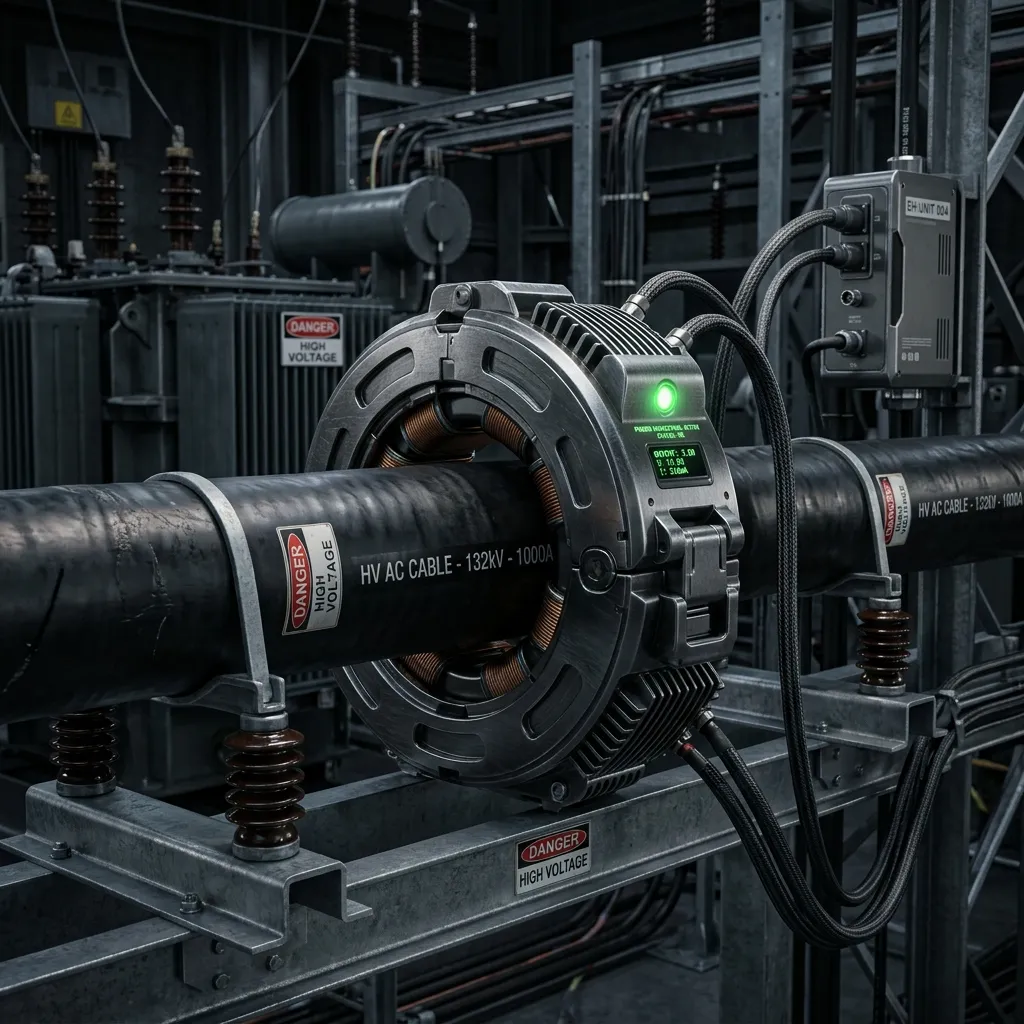
The stray magnetic flux surrounding high-current industrial cables is harvested by toroidal split-core clamp coils. This powers telemetry nodes measuring cable temperature and load balance without outtages, cabling, or load changes.
Transformers: Reclaiming Stray Magnetic Field
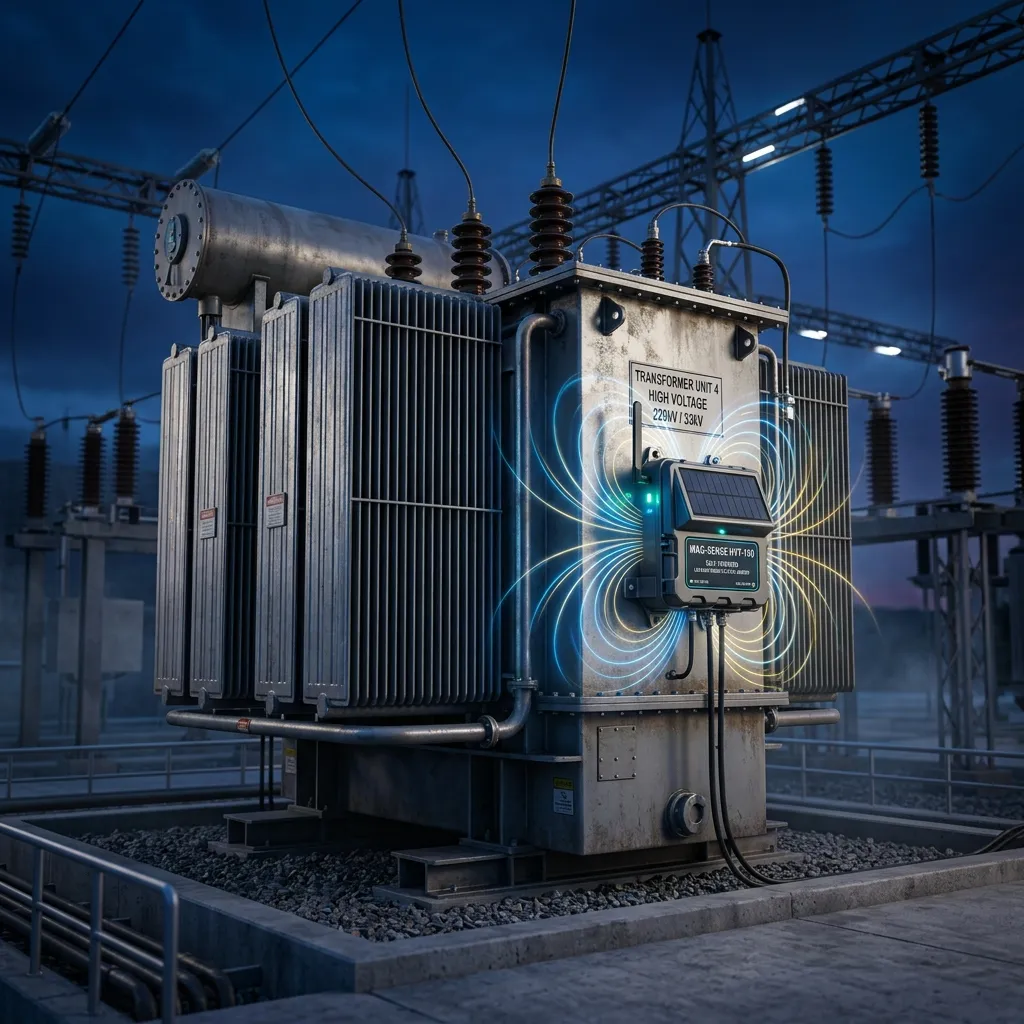
Stray alternating magnetic fields leaking from transformer metal casings are captured by surface-mount magnetic harvester blocks. This harvested energy powers sensor packages reporting oil temperature, humidity, and vibration autonomously.
RF Rectenna: Exciting Power from Ambient Wireless Waves
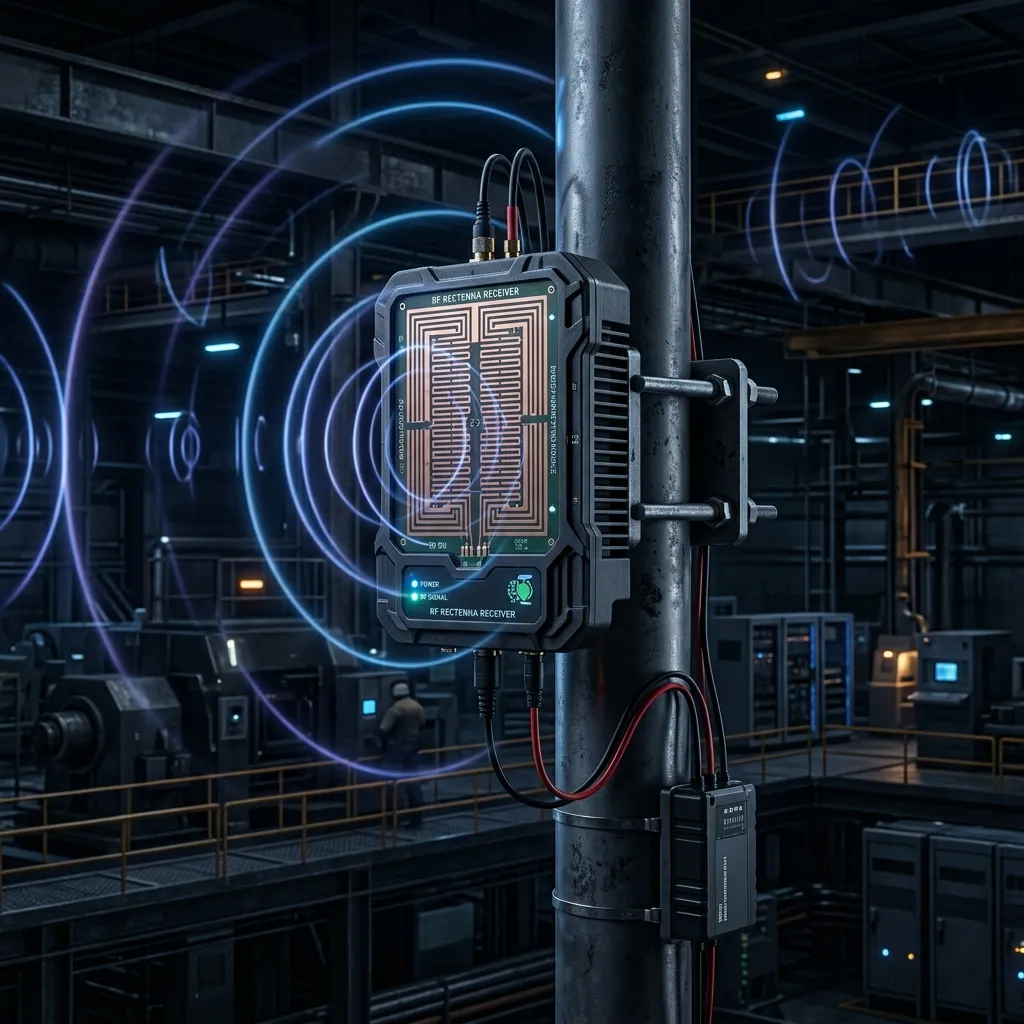
Stray Wi-Fi, GSM, and radio-TV signals in urban and industrial environments are captured by high-frequency rectifying antennas (rectennas) and Schottky diodes. This recovers microwatts of electricity to run specialized low-power telemetric nodes.
Initiate an Electromagnetic Harvesting Custom Project
Consult with our engineering team to analyze the magnetic flux and ambient RF energy potentials of your high-voltage lines, busbars, and transformer stations.
Technical FAQs on RF & Magnetic Field Harvesting
What is the minimum current required in a power line to enable magnetic field harvesting?
To generate stable electricity, our clamp-on toroidal induction harvesting modules require a minimum AC line current of 5 Amps. As the current draw increases, the harvested electrical power grows logarithmically.
Which radio frequencies can be harvested for electrical power?
RF harvesting systems capture electromagnetic waves from the most common ambient transmission bands, including GSM (900 MHz / 1800 MHz), Wi-Fi (2.4 GHz), and radio-television signals (UHF/VHF), converting them into DC power via rectennas.
Does installing a magnetic harvesting clamp impact the primary cable or signal transmission?
No. The system works strictly through passive inductive coupling. Because it only captures the stray magnetic field radiating outside the conductor, it exerts no electrical load, impedance shift, or signal disruption on the primary transmission line.